Asphalt vs Concrete Driveway in Minnesota: Which One Actually Holds Up?
Asphalt or concrete? It's the question almost every Minnesota homeowner asks before pouring a new driveway — and the answer matters more here than almost anywhere else in the country. Our freeze‑thaw climate, road‑salt season, and snowplow traffic put both materials through a test most other regions never see. Here's how each one actually performs in front of a Watertown or west‑metro home. If you're about to have new asphalt installed, also read our first‑year new asphalt driveway care guide.
The short answer
Asphalt flexes with Minnesota's freeze‑thaw cycles, is faster to install, and is dramatically easier to repair. Concrete lasts longer in stable climates but cracks harder and is far more expensive to fix when it does fail. For most Minnesota homeowners, asphalt is the more practical choice — concrete only makes sense in specific situations.
How Minnesota freeze‑thaw treats each material
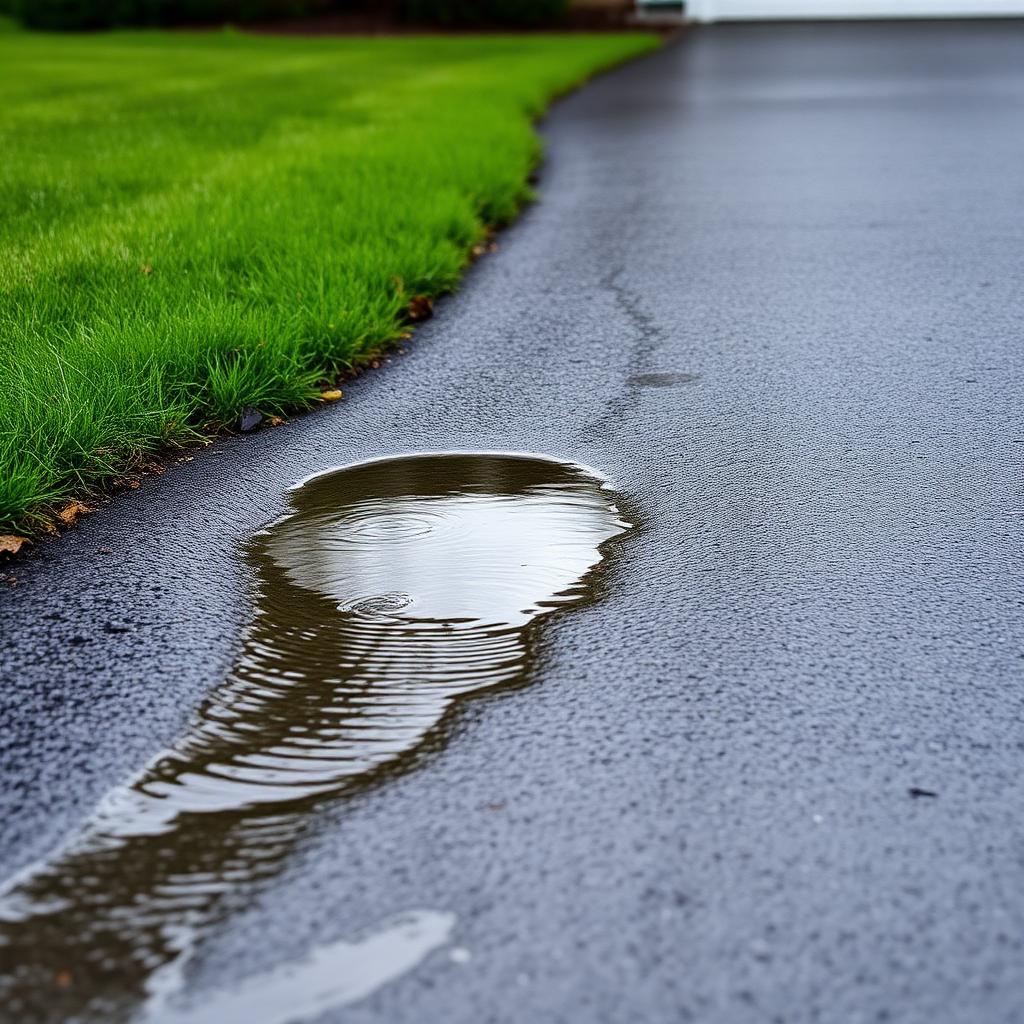
Minnesota averages dozens of freeze‑thaw cycles every winter — each one expands trapped water by roughly 9% and pries pavement apart from the inside. The two materials react very differently:
- Asphalt is a flexible binder. It moves with the soil as it heaves and settles. Small cracks open, but the surface absorbs movement instead of fracturing.
- Concrete is rigid. When it moves, it cracks — and the cracks tend to be wider, deeper, and harder to disguise. Control joints help, but Minnesota frost depths (often 3–5 feet) regularly outflex what concrete is engineered for.
The MnDOT pavement preservation program is built around this exact reality: Minnesota's climate punishes rigid pavements faster than flexible ones unless the base and drainage are perfect.
Lifespan and repairability
- Asphalt: 20–30 years with regular sealcoating and crack filling. Repairs are simple — saw‑cut patches, hot‑pour crack fill, and resurfacing all blend in.
- Concrete: 30–40 years if installed on a perfect base in a stable climate. In Minnesota, real‑world lifespans are often closer to asphalt because slab cracks and frost heaves shorten the curve. Repairs almost never blend — patched concrete is visible from the street.
For more on stretching asphalt to the high end of that range, see how long sealcoating actually lasts in Minnesota.
Snowplows, salt, and stains
- Plows: Asphalt forgives plow blades; small scrapes are cosmetic and disappear at the next sealcoat. Concrete chips and spalls where blades catch.
- Salt and ice melt: Concrete is more vulnerable to chloride‑driven surface scaling, especially in its first winter. Asphalt isn't dissolved by salt, but the extra freeze‑thaw cycles salt creates accelerate cracking.
- Oil and fluid stains: Both stain. Sealed asphalt cleans up the easiest — see our guide on removing oil stains from asphalt. Concrete stains are nearly permanent without aggressive cleaning or grinding.
Curb appeal, resale, and feel
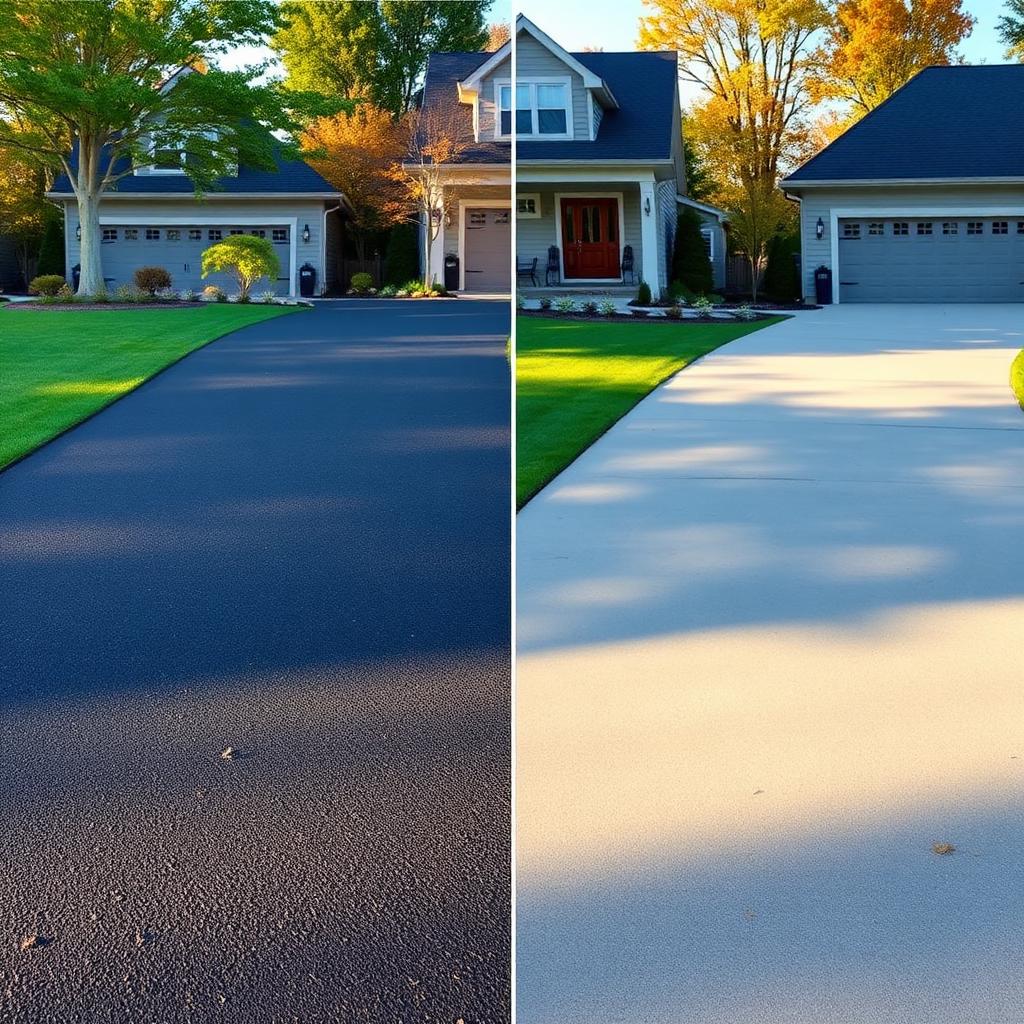
Concrete photographs well and offers more decorative options (broom finishes, stamping, color). Asphalt has a clean, uniform black look — especially right after sealcoating — that pairs well with most Minnesota home styles. From a resale standpoint, MN buyers value condition over material: a well‑maintained asphalt driveway beats a cracked, patched concrete one every time.
Installation and downtime
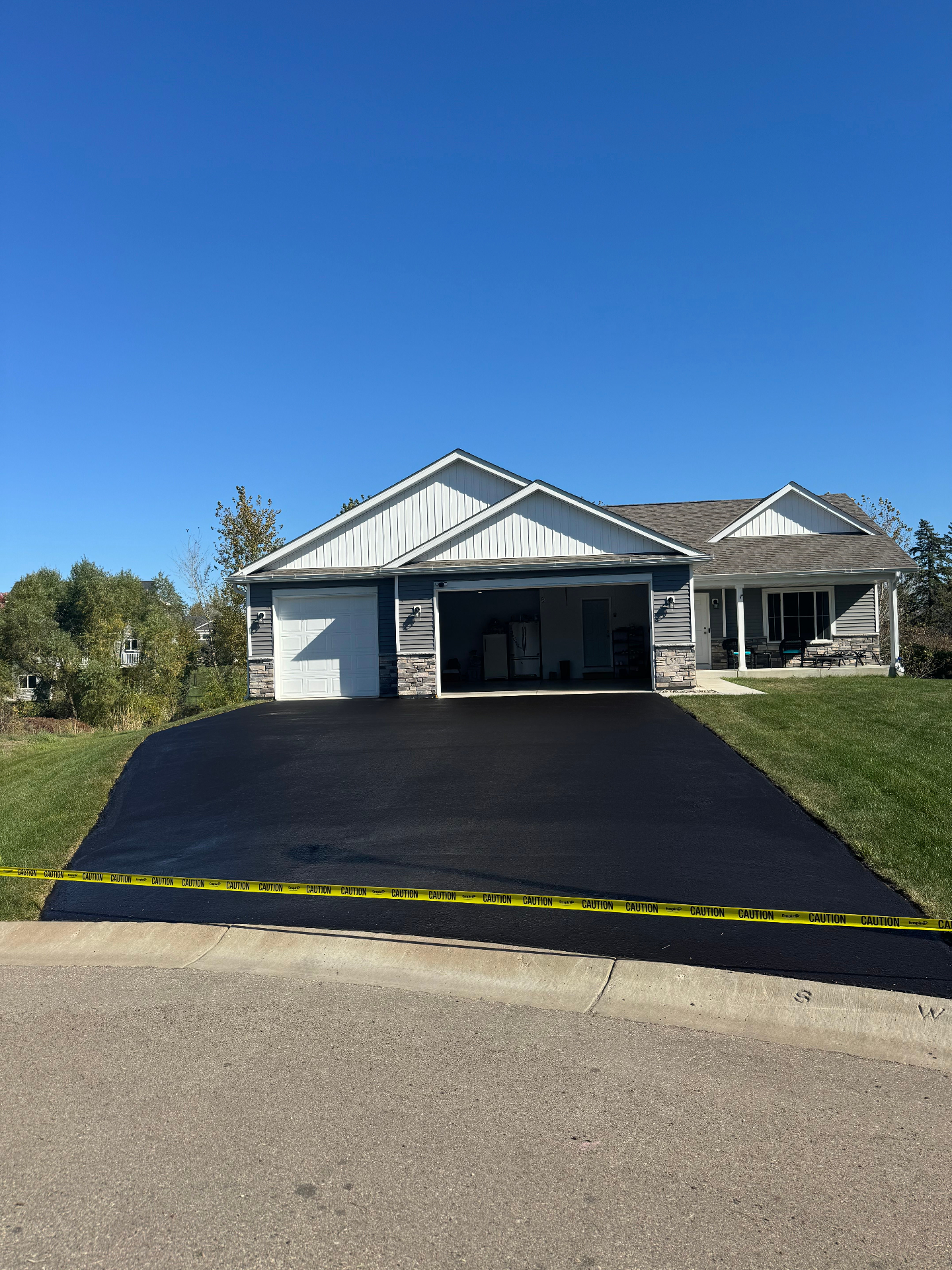
- Asphalt: Drivable within 24–72 hours of paving, full cure in 30 days, first sealcoat 6–12 months later.
- Concrete: Off‑limits to vehicles for at least 7 days, full cure 28 days, no de‑icers the first full winter.
In a Minnesota construction season that effectively runs May through October, that downtime matters — especially if you're replacing your only driveway.
When concrete is still the right call
Concrete makes sense for:
- Garage aprons that take repeated point loads and fluid drips.
- Steep driveways where summer asphalt softening is a concern.
- Decorative front entries where finish matters more than serviceability.
- Sites with engineered base, proper drainage, and a long‑term owner.
For most everyday Minnesota driveways, though, asphalt's flexibility, repairability, and lower lifetime maintenance burden win.
Maintenance reality check
Either material rewards a schedule. Asphalt needs sealcoating every 2–3 years and crack fill as needed; concrete needs joint sealing, penetrating sealer, and careful de‑icer choice. The Minnesota asphalt driveway maintenance calendar lays out exactly what each season should look like for asphalt owners.
FAQs
Which lasts longer in Minnesota?
On paper, concrete. In real Minnesota conditions, the gap closes fast — frost heave and slab cracking pull concrete lifespans toward asphalt's. Well‑maintained asphalt routinely reaches 25–30 years.
Can you sealcoat concrete?
You can apply penetrating concrete sealer (siloxane or silane), but not the asphalt emulsion sealcoat used on blacktop. Concrete sealer mainly fights chloride intrusion and scaling, not UV.
Which handles snowplows better?
Asphalt. Blade scrapes on asphalt are cosmetic; on concrete they chip and spall, and those chips don't repair invisibly.
Can you put asphalt over concrete?
Sometimes — but only if the underlying slab is stable, drainage is addressed, and a bond coat is used. Cracks in the concrete below will telegraph through the asphalt within a few seasons unless the slab is broken up first.
Which has lower lifetime maintenance?
Asphalt repairs are cheaper, faster, and blend in. Concrete needs less frequent attention but every repair is visible and disruptive. Over 25 Minnesota winters, the two often even out — and asphalt tends to look better at year 20.
Not sure which is right for your site?
Prater Companies is locally owned and based in Watertown, MN, with decades of paving experience across Mayer, Waconia, Delano, Howard Lake, and the surrounding west metro. We'll walk your site, look at slope, drainage, and use, and give you an honest recommendation — even when that recommendation is "leave what you have and maintain it." Call 763‑234‑7341 or request a free on‑site assessment. Already paved with asphalt? Check current Prater Companies promotions before scheduling your next maintenance round.