Driveway Drainage in Minnesota: How Water Destroys Asphalt (and What to Do About It)
Water is the single biggest reason Minnesota asphalt driveways fail early. UV and salt get blamed a lot, but it's standing water, poor slope, and runoff from the roof or the lawn that quietly soften the base under the asphalt and open the door to cracks, settlement, and potholes.
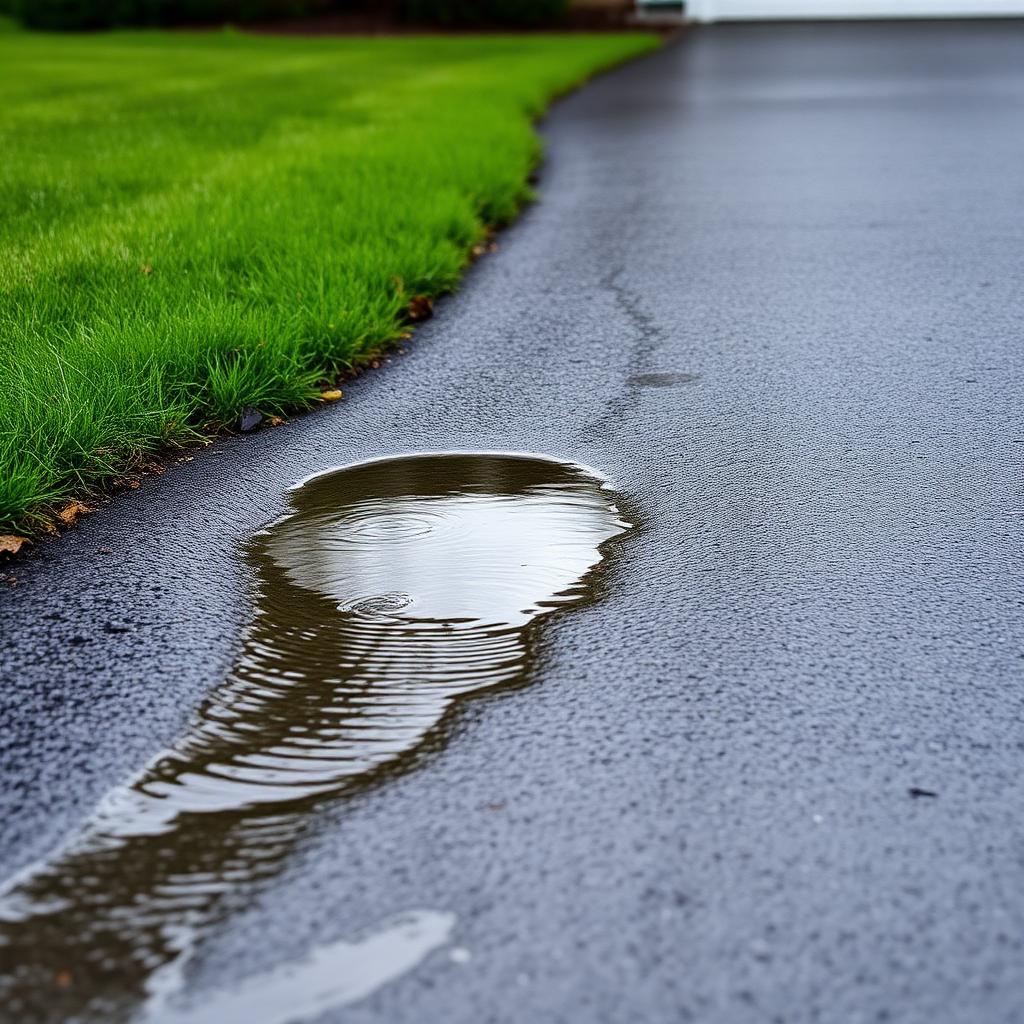
If your driveway holds puddles after every rain, has a low spot near the garage apron, or you can see water tracking along the edges into the soil, you already have a drainage problem — even if the surface still looks okay. Here's how water damages asphalt in a Minnesota climate and what actually helps.
How water actually damages an asphalt driveway
Asphalt is a flexible pavement. It sits on a compacted aggregate base, and that base is what carries the weight of your vehicles. When water gets in and stays, three things happen:
- The base softens. Saturated gravel and soil lose strength. Under a car tire, that flexes the asphalt more than it was designed to move.
- Freeze‑thaw expands the water. Water expands about 9% when it freezes. In Minnesota we cycle above and below freezing dozens of times each winter and spring, and each cycle pries cracks open a little further.
- The binder washes out. The asphalt binder holds the aggregate together. Constant water flow across a raveled or unsealed surface accelerates that loss, which is one reason preventive maintenance matters — see how often we recommend seal coating a Minnesota driveway.
The warning signs of a drainage problem
You don't need to wait for a pothole. These are the early tells we look for when we walk a driveway in Watertown, Waconia, or Delano:
- Puddles that sit for more than a few hours after rain.
- A dark, damp strip down the middle or along one edge long after the rest has dried.
- Silt, sand, or organic debris deposited in a low spot.
- A visible dip near the garage apron or where the driveway meets the street.
- Cracks that only appear on one side of the driveway — usually the low side.
- Alligator cracking in a specific patch (a strong sign the base under that patch is wet and moving).
- Ice sheets that form in the same spot every winter.
- Grass and moss creeping in along the edge where water pools.
Where the water is usually coming from
The roof
Downspouts that dump directly onto the driveway, or right beside the driveway edge, are one of the most common causes of premature failure. A single downspout can deliver hundreds of gallons in a storm to one small area of pavement.
The lawn and landscape
A yard that slopes toward the driveway sends surface runoff and irrigation water into the base. Sprinkler heads that spray onto the asphalt do the same thing on a schedule.
The street
If your driveway sits lower than the street or the gutter line, storm runoff can wash back across the apron every time it rains. This is especially rough on the section closest to the road, where it meets the concrete curb.
The driveway itself
Original grading matters. A driveway that was built flat, or with a belly in the middle, will collect water forever unless something changes. Settlement over time can create the same problem in a driveway that used to drain fine.
Fixes that actually work
Redirect the roof water
The cheapest, highest‑leverage fix is usually a downspout extension or a buried drain that carries roof water at least several feet away from the driveway edge. Do this before anything else — it protects every other repair you make.
Regrade the lawn edge
Building the soil up slightly along the driveway edge, or adding a shallow swale a few feet away, keeps yard runoff from pouring onto the asphalt. Landscape edging alone doesn't do this; it's about slope.
Fill and seal cracks early
Every open crack is a straw feeding water into the base. Hot‑pour crack sealant closes that path. We cover the trade‑off between filling versus replacing in crack filling vs. driveway replacement.
Seal coat the surface
A fresh two‑coat seal application restores the top layer that keeps water out of the asphalt binder. It's not a drainage fix on its own, but it's a critical piece once the water is being routed away correctly. How long that protection lasts is covered in how long sealcoating lasts on a Minnesota driveway.
Patch or rebuild the failed section
Once alligator cracking or settlement shows up, sealer alone won't fix it — the base under that patch needs attention. A saw‑cut and patch of the failed area is the honest repair.
Grade or slope corrections
If the driveway itself is holding water because of how it was built or how it has settled, you're eventually looking at a grade correction or a section replacement. Sealer over a low spot just gives you a darker low spot.
Winter drainage matters, too
Snow that gets piled on the driveway melts in place. If the driveway doesn't drain, that meltwater refreezes overnight into a sheet of ice, and by morning you have a slip hazard plus a fresh round of freeze‑thaw damage. A few things help:
- Push snow off the driveway to the low side of the yard, not onto the driveway edge where it will melt back onto the asphalt.
- Keep the last several feet near the garage clear so meltwater has somewhere to go instead of pooling at the door.
- Use ice melt sparingly — chloride products are hard on asphalt and on the concrete apron. See our Minnesota asphalt maintenance calendar for a month‑by‑month plan.
When to call somebody out
If you have persistent puddling, a dip you can see standing at the end of the driveway, cracks concentrated on one side, or a section that's clearly moving under load, it's worth having a local crew walk it before it turns into a full replacement. Prater Companies does this across Waconia and the west metro and we'll tell you honestly whether it's a maintenance issue, a grading issue, or a rebuild.
Frequently asked questions
Does sealcoating fix a driveway drainage problem?
No. Sealcoating protects the surface from UV and water absorption, but it doesn't change the slope of the driveway or where water goes. If you have standing water, the fix is drainage — redirected downspouts, regrading, or a section repair. Sealer on top of an unresolved drainage problem will still fail early.
Why does water pool in the same spot every year?
Because the surface is lower there. That's either how it was originally paved, or the base underneath has settled. Once the low spot exists, every rain and every snowmelt sends water back to it, which slowly makes it worse. It won't self‑correct.
Can a downspout really damage my driveway?
Yes. A downspout dumps concentrated roof runoff at one point. Over a season, that's a huge volume of water working on one edge of the pavement, saturating the base and washing fines out from underneath. Extending downspouts away from the driveway is one of the highest‑value maintenance moves you can make.
Are edge cracks always a drainage issue?
Usually. Edge cracks form where the asphalt has the least support — the outer few inches — and where water most easily gets underneath. If the lawn slopes toward the driveway, or the edge is unsupported after erosion, edge cracks show up first. Building the soil back up along the edge slows this considerably.
Do French drains work along a driveway?
They can, when the site actually has somewhere for the water to go. A French drain that ends in a soggy low spot just moves the problem. For most driveways, fixing downspouts and regrading the adjacent lawn solves the issue with a lot less digging.
Get a look from a local crew
Prater Companies is based in Watertown, MN and works across Waconia, Mayer, Delano, Howard Lake, and the west metro. If your driveway is holding water, cracking on one side, or heaving after winter, we'll walk it with you and tell you what's actually going on. Call 763‑234‑7341 or request a free quote. Check current promotions before booking.